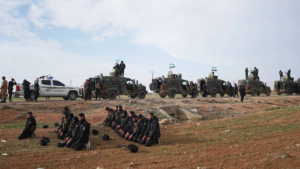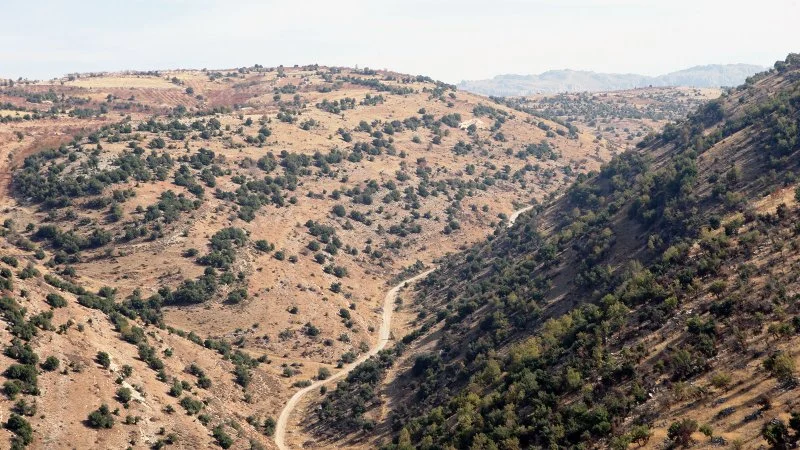
There is no doubt that Lebanon is interested in the issue of demarcating the land borders with Syria, but a year after the potential fall of the Bashar al-Assad regime in Damascus, this issue remains unclear, and the directions of the Syrian regime have not yet become clear.
Speaking of the issue of border control, the file of smuggling from Syria emerges in light of American and Israeli reports that speak of the continued smuggling of weapons to “Hezbollah,” in addition to international support for the Lebanese army to take field measures along the border with Syria to prevent any infiltration or smuggling.
Strategic expert Brigadier General (retired) Naji Malaeb speaks to about the possibility of controlling smuggling on the borders, if Washington has the intention to change the border situation, after seeing the military equipment and American vehicles that were announced at a value of $90 million, as placing monitoring points on the borders guarantees the detection of any movement without the need to deploy soldiers on thousands of kilometers between Lebanon and Syria.
Brigadier General Malaeb affirms that these points must be linked to an operations room in the Ministry of Defense, so that attempts at infiltration or smuggling can be confronted quickly through an automatic movement of artillery or vehicles.
Malaeb reveals the continuation of smuggling on the borders in some areas in the Bekaa and the North, pointing out that it is difficult to stop it completely, because just as smuggling of all kinds used to occur in the past under the protection of certain armed groups, it continues today also under the protection of other armed groups, which makes weapons smuggling possible despite all the monitoring operations carried out by Israeli drones in the Bekaa and North regions.
But weapons smuggling, as Malaeb explains, does not include heavy weapons, but rather individual weapons, mines, or “RPGs,” which are sometimes seized by the Syrians, and therefore, this type of smuggling “neither advances nor delays,” and it does not affect the conflict with the Israeli enemy.
Malaeb adds that the United States’ focus on weapons smuggling operations from Syria to Lebanon is not due to concerns about their effects, but rather serves Israeli threats to Lebanon aimed at accelerating the elimination of weapons outside the framework of the state, specifically the weapons of “Hezbollah.”
Regardless of the passage of a year under the new authority, Malaeb expects the continuation of this “unruly” situation on both sides of the border, unless the army is provided with modern weapons and technologies to detect smuggling, especially since the state has dealt with drug gangs from the Lebanese side of the border with great success, but to control weapons smuggling, coordination and understanding between the governments in Lebanon and Syria is necessary, which has not yet happened despite Saudi sponsorship of some meetings.
Malaeb concludes his speech by saying that the picture is still unclear, as Syria’s ability to monitor and stop smuggling groups may not be available, pointing out that the danger lies in the fact that after armed groups come to power without a strong army, some of these groups may have “benefits” from smuggling operations.