After the fall of “Bashar al-Assad’s” regime, Syria embarked on a long economic recovery journey, seeking to overcome the devastating effects of the ongoing war for nearly 14 years, which began with the outbreak of the Syrian revolution in 2011.
Even before the outbreak of the war that led to the destruction of the country’s infrastructure, Syria suffered from numerous economic challenges as a result of the policies of the “Al-Assad” regime, whether during the era of the father “Hafez,” who ruled the country from 1971 until 2000, or during the era of the son “Bashar,” who succeeded his father in power and continued until December 2024. The Syrian citizen has been burdened by an oppressive regime that drained the country’s resources and plunged it into successive crises, culminating in a war that led to an increase in poverty rates to about 90% of the population, in addition to waves of internal and external displacement affecting millions.
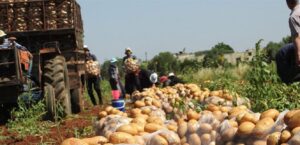
As the pace of the war escalated, economic sanctions were imposed on Syria, leading to a contraction of the economy, a sharp decline in productive activities, the collapse of various economic sectors, the destruction of a large number of factories, and the shrinking of agricultural areas.
“The Collapse of the Lira”
The Syrian lira witnessed an unprecedented collapse, with the US dollar jumping from about 50 liras in 2011 to nearly 15,000 liras when “Bashar al-Assad” fell, before the lira regained some of its value, with the dollar currently reaching about 11,000 liras.
Simultaneously with the collapse of the Syrian lira, the prices of goods and services rose significantly, and the consumer price inflation rate reached about 140%, in addition to the collapse of the government subsidy system that used to help Syrian families cope with the repercussions of the economic collapse.
A year ago, “Bashar al-Assad” left power, leaving a foreign exchange reserve at the Central Bank of Syria of no more than $200 million, in addition to a gold stock of only 26 tons.