In a surprise move, the Higher Customs Council, based on a direct proposal from Director-General Raymond Khoury, imposed a fine of $10 million US dollars on the tanker “Hawk III”. This decision, which is considered the largest in the history of Lebanese Customs, has caused great concern among certain parties who have sought in every way – through intimidation, pressure, and enticement – to close the case or reduce the value of the fine. But those attempts failed, and with them, the lies were exposed, proving that the state is capable, when the will is there, of confronting the networks of forgery and smuggling that have long been beyond accountability.
Since the disclosure of this issue, found himself the target of organized campaigns launched by supporters of the Lebanese Forces party, and accounts linked to influential parties in the Ministry of Energy, after the site published investigations supported by evidence of the forgery of the tanker’s origin and the involvement of intermediary companies in passing Russian fuel oil. The ministry not only defended itself but also resorted to issuing misleading statements claiming that the issue was of a technical nature related to quality, in a clear attempt to hide the fact of forging the origin and cover up its responsibilities. At the same time, engineer Fawzi Mashlab, the complainant, was subjected to a severe attack in which electronic armies and a number of journalists and editors-in-chief participated to question his credibility, before the official facts confirmed the validity of the documents he presented.
Lebanese investigations confirmed that the shipment was entirely Russian, and that the passage of the tanker “Hawk III” through the Turkish port of Mersin was merely a means of changing the country of origin. The official Turkish response came to turn the tables: the documents submitted by Sahara Energy DMCC are not registered in the records of the Turkish state, which means they are forged. This development overturned the narratives of the Ministry of Energy and some media outlets, and opened the door to the prosecution of Sahara Energy and its officials, headed by Collin Raccah, in addition to the company’s representative in Lebanon, lawyer Elie Al-Ramz, on charges of criminal forgery punishable by up to ten years in prison. Al-Ramz had highlighted the forged documents after the tanker was seized and recovered during an attempted escape, which confirms that the forgery was deliberate and premeditated, and that professional immunity does not apply to such a crime, which calls for the initiation of procedures to lift immunity to prosecute him judicially.
The detention of the tanker was accompanied by an additional burden on the state, as the Lebanese army deployed a naval point to monitor it around the clock, which caused financial and logistical burdens that prompted the military institution to demand that customs speed up the resolution of the file. According to the Customs Law, a means of transport that is exposed to damage or that causes unjustified burdens on the state may be sold at a public auction. The value of the tanker is estimated at $20 million, which makes the fine fully recoverable through the auction, with immediate interest from foreign companies in entering the purchase process.
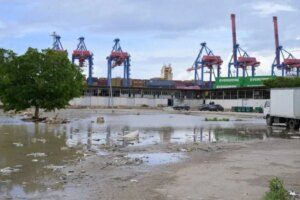
These measures come in light of ongoing national concern: preventing the recurrence of the “RHOSUS” ship scenario that destroyed the port of Beirut after being left detained for years. The state today faces a clear choice: immediate sale and recovery of the fine, or risk a new tragedy.
But the “Hawk III” case is just the tip of the iceberg. Customs continues to investigate 35 other tankers, for which Fawzi Mashlab submitted reliable reports containing details of the forgery of origin and manipulation of documents and shipments. Information indicates that coordination between the Financial and Cassation Public Prosecution may enable the state to recover hundreds of millions of dollars in fines imposed on the four companies involved: OQ / OD Trading (Omani Oil), BB Energy, Sahara Energy DMCC, and Iplom International SA.
The customs decision constitutes a national precedent, and more than that: it is a breaking of the barrier of fear that has controlled the administration for decades. Raymond Khoury and Samer Dia faced unprecedented pressure, but they adhered to the application of the law instead of succumbing to politics and networks of interests. Today, the ball is in the court of the judiciary and customs together: will the path be completed until the recovery of more than $600 million in fines due on 35 tankers, or will the file be returned to the same darkness that swallowed billions of public money?