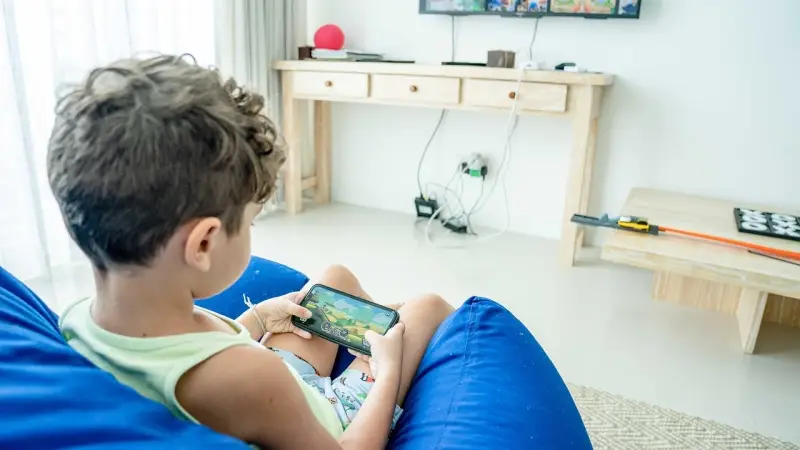
The study, published Monday in the peer-reviewed Journal of Pediatrics, revealed a link between smartphone ownership in early adolescence and an increased likelihood of mental health problems and obesity.
Regarding psychological effects, the study noted an increase in rates of depression and sleep disorders among children who own smartphones at age twelve or younger, compared to their peers who do not own these devices.
Researchers from Children’s Hospital of Philadelphia, the University of California, Berkeley, and Columbia University reached these findings after analyzing data from more than 10,000 adolescents from across the United States, who participated in the Adolescent Brain Cognitive Development (ABCD) study between 2018 and 2020. This study, funded by the National Institutes of Health, describes itself as “the largest long-term study of brain development and child health” in the country.
Researchers reported that 63.6% of ABCD study participants owned smartphones, and the average age of acquisition was 11 years. Using this data, the researchers concluded that younger children face greater risks of sleep deprivation or obesity associated with smartphone ownership, noting a deterioration in health outcomes the younger the child was when they got their first smartphone.
The study’s lead author, child psychiatrist at the Center for Youth Suicide Prevention, Intervention and Research at Children’s Hospital of Philadelphia, Ran Barzilay, told CBS News: “We didn’t even look at what the kids were doing on the phone, we asked one simple question: Does just having a smartphone of one’s own in this age group have anything to do with health outcomes?”
The Pediatrics study also compared children who received smartphones at age 12 with those who did not, and found that after one year, those who did not own smartphones had better mental health than those who did.
In an interview with “The Daily Report” program on “CBS News,” Barzilay said: “We took into account the fact that children may have had other technological devices such as tablets or iPads, and this did not change the results.”
In a separate statement, Barzilay explained that “the results of his study suggest that parents should view smartphones as an important factor in adolescent health, and deal with the decision to give children a phone carefully and thoughtfully.” He pointed out that smartphones can play a constructive role in the lives of adolescents by strengthening their social relationships and helping them learn, adding that some families see smartphones as essential for their children’s safety.
In the future, the researchers behind the study, according to Barzilay, hope to investigate aspects of smartphone use and ownership associated with negative health effects on young people. The researchers also intend to study younger children, who received smartphones before the age of 10, in an effort to understand who is most susceptible to the harmful effects of smartphone use, and who can benefit from them most.
Ultimately, Barzilay explained that “the goal is to identify ways to protect children and adolescents who own smartphones from the consequences described in their findings.”
In recent years, a growing number of experts have warned about increased screen time and its impact on children and adolescents. In a 2023 consultation on social media use and mental health, former US Secretary of State and Surgeon General Dr. Vivek Murthy recommended creating “technology-free zones” and encouraging children to foster personal friendships. Meanwhile, several states have taken steps to ban cell phones in schools.
According to the Pew Research Center, 95% of teenagers between the ages of 13 and 17 own a smartphone in 2024. More than half of parents with children between the ages of 11 and 12, who were included in the research center’s survey at that time, said that their children also own smartphones.
The same survey found that approximately 30% of parents with children between the ages of 8 and 10 said that their children own smartphones, as did 12% of parents with children between the ages of 5 and 7, and 8% of parents with children younger than 5 years.
Barzilay concluded: “Most likely, all teenagers will eventually get a smartphone.” “Once that happens, it is advisable to monitor what our children are doing on their phones, make sure they are not exposed to inappropriate content, and that smartphones are not disrupting sleep.”