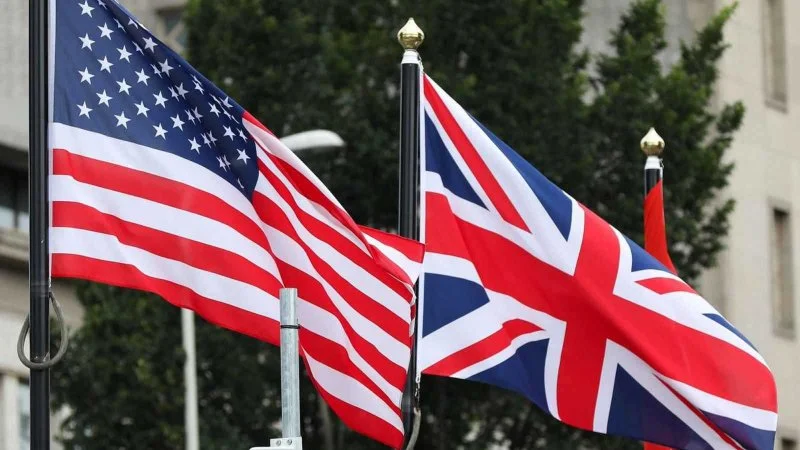
The US government clarified that this agreement aims to protect American patients from having to pay exorbitant prices for medicines in order to support the health systems of other developed countries, according to a statement issued by James Greer, the White House trade representative.
The price increase will be applied to new drugs considered “innovative,” as well as to purchases by the “National Health Service,” the public healthcare system in Britain.
London affirmed, in a statement issued by the White House, that it would not offset this price increase by reducing the prices of other drugs on pharmaceutical companies’ lists.
In return, Washington has eliminated tariffs on pharmaceutical products imported from Britain, which began to be applied last October, when Washington imposed similar tariffs on these products from all countries around the world. The United States has also pledged not to impose any new fees in the future.
US Secretary of Health Robert Kennedy Jr. affirmed in a statement: “Americans should not face the highest drug prices in the world for medicines they helped fund.”
He added: “This agreement with the United Kingdom strengthens the global environment for innovative medicines, and achieves a long-awaited balance in pharmaceutical trade between the United States and the United Kingdom.”
Drug prices in the United States are among the highest in the world, exceeding prices in neighboring countries and in Europe.
According to a study conducted by the RAND Corporation, Americans pay on average two and a half times the price of a drug compared to the French, for example, a gap that US President Donald Trump pledged to reduce.
Trump repeatedly threatened to impose tariffs of 100% on all imported patented drugs if pharmaceutical companies did not establish factories in the United States.
The tariffs on pharmaceutical products, which were announced at the end of September, began to be effectively applied in October, and were expected to gradually reach 100%.
However, these fees do not include products coming from specific regions or countries, such as the European Union, where the trade agreement between Brussels and Washington stipulates that taxes on European products may not exceed 15%.