However, if this decrease continues at a rate between 1% and 5% over twenty years, the disaster would be much greater.
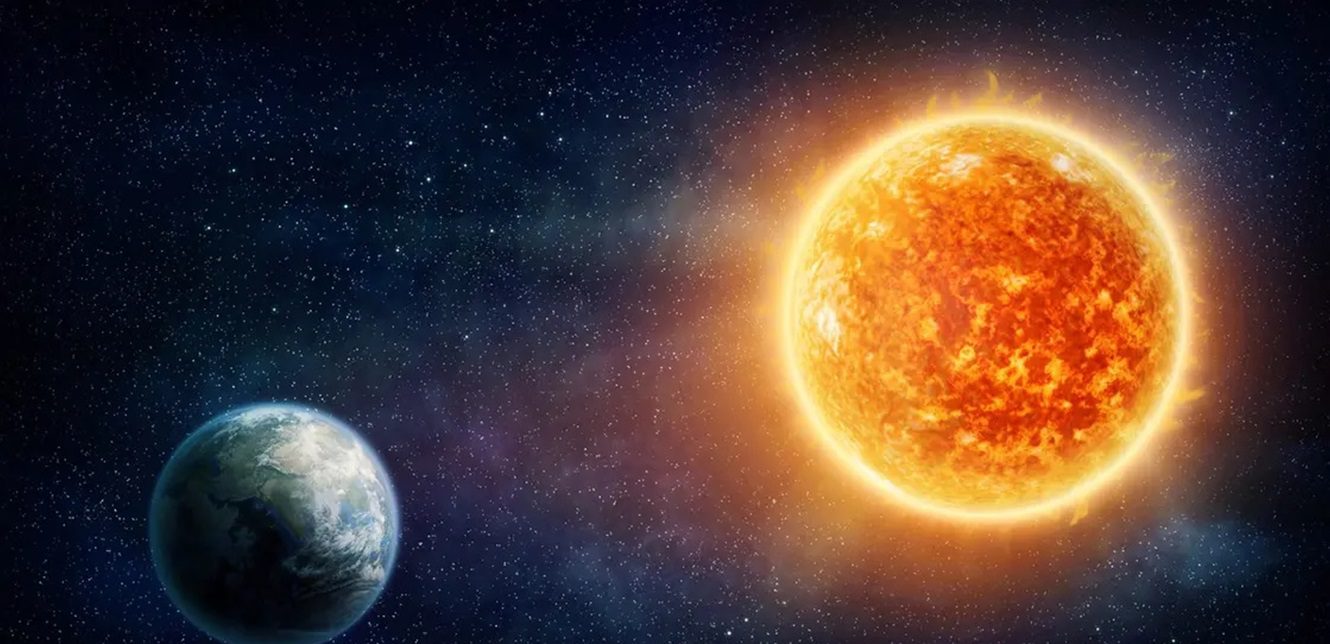
Dr. Becky Smethurst, an astrophysicist, explains that “a decrease in solar energy by just 1% could trigger a new ice age, with the expansion of ice caps, the collapse of ecosystems, agricultural failure, and food shortages. Humans may survive thanks to modern technology, but they may have to live underground.”
If the sun were to completely disappear, the surface temperature of the Earth would drop very quickly. Within a week, it would reach below -18 degrees Celsius, and within a year, it would drop to below -73 degrees Celsius, eventually settling at around -240 degrees Celsius.
Under these extreme conditions, survival would be nearly impossible, even in the depths of the oceans.
Dr. Alexander James explains: “Without the sun, plants would not be able to photosynthesize, which means a lack of oxygen and a sharp drop in temperature, and most forms of life would not be able to survive.”
However, scientists confirm that the dimming of the sun in this way is highly unlikely. Even during periods of extreme solar calm, changes in solar radiation do not exceed 0.25%, which is a very small percentage compared to catastrophic scenarios.
Professor Mike Lockwood adds that “the sun’s massive mass acts as a heat sink, and it could take billions of years to dissipate the energy. Any faster decline than that is scientifically impossible.”
Therefore, even if the sun’s brightness begins to decline gradually, we will have enough time to deal with any changes before life on Earth is in danger. (Russia Today)