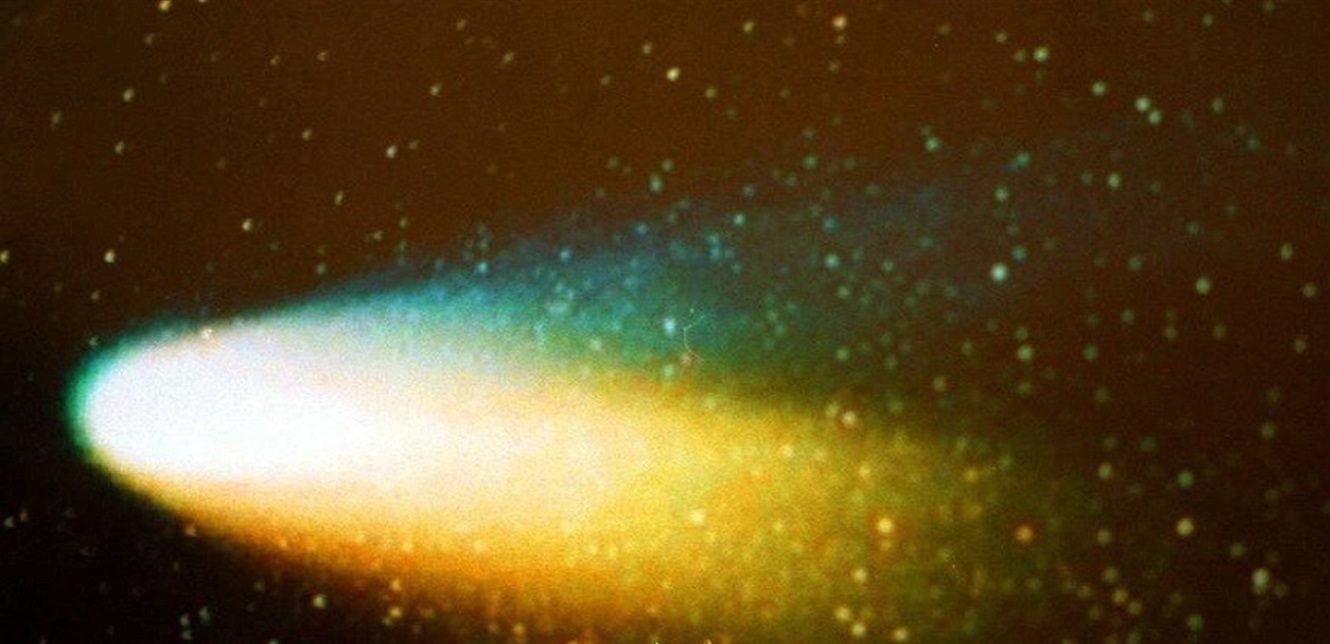
Eismont, a senior researcher at the Space Research Institute of the Russian Academy of Sciences and an assistant professor in the Department of Mechanics and Control Processes at the Peoples’ Friendship University, explained that the comet is currently in a remote area located between the orbit of Pluto and the asteroid “Sedna,” but the gravity of the solar system will keep it captive in its orbit, which will lead to its return about 2365 years from now.
The Russian scientist indicated that the fate of the comet during its next return will be determined based on its interactions with Jupiter, saying: “Jupiter’s gravity may throw it out of the solar system permanently, or direct it towards the sun, where it will eventually burn up.” He added that Jupiter has historically played the role of “guardian of the solar system,” as it changes the paths of celestial bodies near it by either expelling them or pushing them inward.
Comet “Hale-Bopp” was discovered on July 23, 1995, and quickly became a historical astronomical event. On April 4, 1997, it reached its peak brightness when it passed the closest point to Earth (perihelion), where its brightness reached -0.7 apparent magnitude, and its tails extended in the sky for about 20 degrees, making it visible to the naked eye for an exceptional period of 18 months.
This comet sparked widespread global interest in astronomy, but in return, strange conspiracy theories were launched, claiming that a spacecraft hidden by its tails was heading towards Earth. Extremist religious sects also exploited it to spread fear of the “end of the world,” although the comet passed near Jupiter without suffering any damage.
With its expected return in the forty-fourth century, “Hale-Bopp” may give humanity another opportunity to contemplate the greatness of the universe… or face new myths.