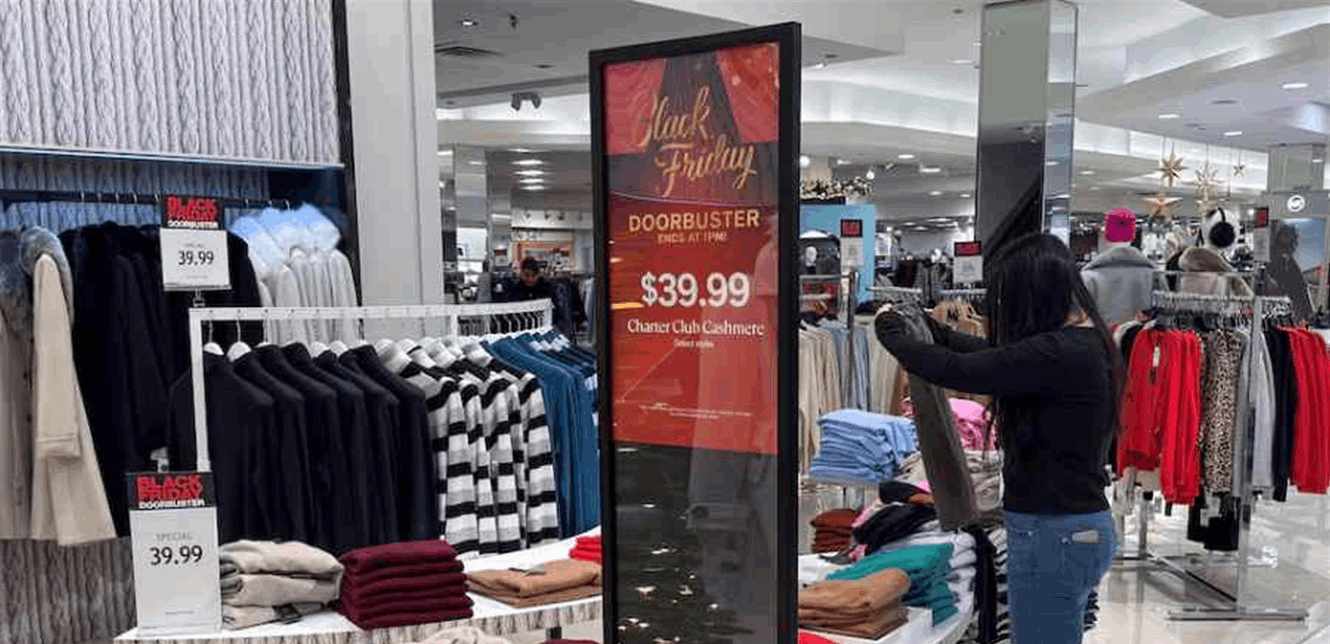
Mastercard SpendingPulse data showed a 10.4% growth in e-commerce sales, compared to only 1.7% inside stores. AI-powered visits to retail websites in America saw a significant increase of 805% year-over-year, with tools like Walmart’s Sparky and Amazon’s Rufus entering the market. Lego sets, Pokémon cards, Nintendo Switch and PlayStation 5 consoles, and products like Apple AirPods and KitchenAid mixers were among the best-selling items.
Globally, Salesforce estimated that AI “agents” influenced $14.2 billion in online sales in a single day, including $3 billion in the United States, where total digital spending reached $18 billion (+3% year-over-year). However, the increase in prices limited the volume of purchases: the volume of orders decreased by 1%, the average number of units per purchase decreased by 2%, while the average selling price increased by 7%, driven by the impact of tariffs and the income growth of higher-income categories, which supported sales of luxury goods.
Despite discount rates remaining stable compared to 2024, analysts saw that the real value of “Black Friday” offers declined due to inflation and tariffs, making many shoppers more cautious in physical stores. In contrast, Adobe expects this momentum to pave the way for a new record in “Cyber Monday,” with expected sales of about $14.2 billion (+6.3%), amid expectations of strong discounts of up to 30% on electronics, along with significant offers on clothing and computers. (telegraph India)