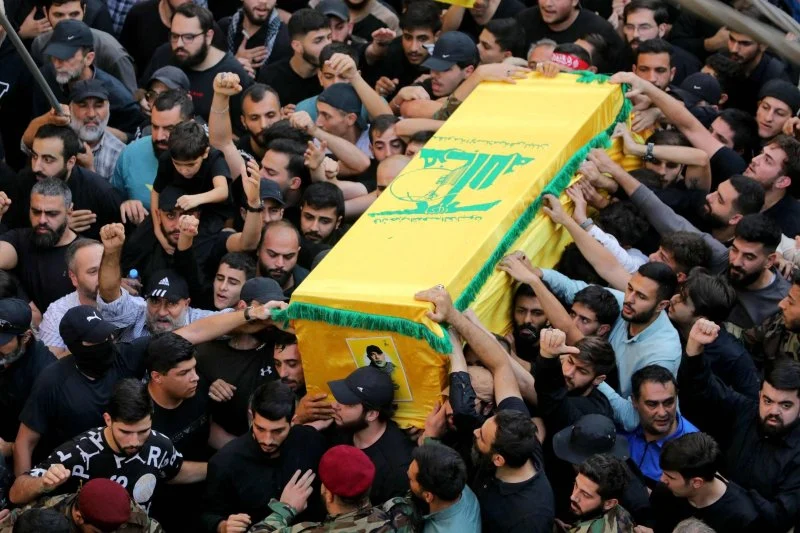
The newspaper reported that Israel spent a full decade trying to assassinate Tabatabai, until it was able to track his location in an apartment in the suburb at the end of the week. The newspaper pointed out that Tabatabai, who “rose through the ranks and contributed to building a network of factions supported by Tehran around Israel, led Lebanese groups’ forces in Syria, and was sent to Yemen to help train the Houthis,” was born to a Lebanese mother and an Iranian father.
The Wall Street Journal stated that his last mission was to “rebuild Hezbollah” after the losses it suffered during the two-month war with Israel last year, a role that “ultimately led to his death.”
During the operation, which an Israeli military official called “Black Friday,” Israel located Tabatabai and targeted the building with missiles fired from an F-15 fighter jet, with the aim of “undermining the party’s rebuilding efforts” and sending a clear message. The newspaper quoted former Israeli National Security Advisor Yaakov Amidror as saying: “It is a message to the leaders of Hezbollah and the government of Lebanon… if they do not implement disarmament, Israel will do it.”
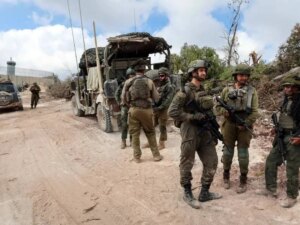
The report explained that Israel and the United States have intensified pressure on the Lebanese government due to the delay in disarmament steps, amid fears of the collapse of the ceasefire agreement and the return of Lebanon to a state of war. According to the conflict data company Acled, the Israeli army has carried out more than 1,500 raids in Lebanon since the start of the ceasefire.
In contrast, Hezbollah and the authorities in Beirut affirm their commitment to the ceasefire agreement, and that the Israeli violations have caused hundreds of casualties since November 2024.
The report highlights the increasing internal tension in Lebanon, especially after the Prime Minister, Nawaf Salam, announced the army’s submission of a plan to confine weapons to the state before the end of the year. Hezbollah considered this decision a “charter violation” and affirmed that it is “non-existent” for it, stressing that its weapons are a fundamental element of “Lebanon’s strength.”
The newspaper indicates that Tabatabai was a pivotal figure in the efforts to reorganize the party’s ranks, as he took over the management of military operations as one of the last remaining senior leaders after a series of assassinations targeted the first row. It quoted Arab officials as saying that Tabatabai worked quickly after the war to strengthen the party’s forces in the south, and adopted a “small cells” tactic to increase the ability of elements to survive in any future confrontation. According to these officials, his efforts helped the party compensate for the loss of more than 2,500 fighters during the war.
The newspaper adds that Tabatabai was working at the time of his assassination on establishing a system for training replacements for field commanders, to avoid paralyzing units when their leaders were lost, which happened last fall.
The “Wall Street Journal” quoted Arab and Israeli intelligence sources as saying that Hezbollah is re-stocking missiles, anti-armor weapons, and artillery, whether through ports or smuggling routes through Syria, or through self-production.
Amidror believes that Tabatabai was “the head of all these efforts… from smuggling weapons from Syria, to rebuilding facilities in Lebanon, and training new recruits.”
The newspaper mentions that Tabatabai survived an Israeli strike in Quneitra, southern Syria, in January 2015, then moved to Yemen to train the Houthis before returning to Lebanon. The US State Department had designated him in 2018 as a “global terrorist,” with a reward of $5 million for information about him.