– Abdullah Qamḥ
Lebanon is facing dangerous turning points. Some voices in Israel are threatening to escalate strikes after the anticipated visit of Pope Leo XIV to Beirut between November 30 and December 2. In contrast, external sources indicate Hezbollah’s readiness to respond, believing that the party is certain of Israel’s intention to escalate and that it is waiting for it in the field to try to “repair” what has been broken from the rules of engagement.
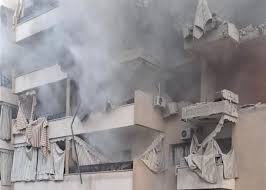
Amid these circumstances, the assassination of the Chief of Staff of Hezbollah, Mr. Haitham Al-Tabatabai, in the southern suburb of Beirut, adds another dangerous dimension to the events.
The President Repeats
In this scene, the Lebanese state appears to be watching from the outside. The “Five Points” initiative announced by President Joseph Aoun on Independence Day from the Beno Barakat base south of the Litani, carries multiple meanings, but it is not new. It is in fact a “compilation” of old ideas that the President reformulated and prioritized, and launched as an initiative aimed at laying Lebanese foundations for negotiation.
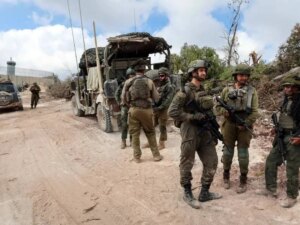
However, what the President – or his team – overlooks is that these clauses had already been rejected by the American administration when they were presented to the American envoy Tom Barak, in response to the paper submitted by the latter to Lebanese officials. The Lebanese response was met with rejection from both the Israeli and American sides. In addition, Israel responded on the ground to Aoun’s initiative by carrying out assassination operations deep in southern Lebanon during the past two days.
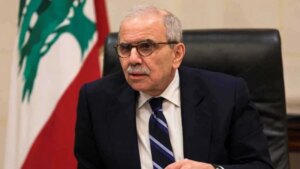
Practically, the President ignores a key point that Prime Minister Nawaf Salam had already pointed out in his interview with Bloomberg a few days ago, when he confidently affirmed that the American-Israeli response to the Lebanese proposal was negative. This means that any presidential proposals lose their political value, as long as Tel Aviv and Washington have decided their position.
Here, the lack of coordination between Presidents Aoun and Salam becomes clear, contrary to what is rumored about a wide presidential coordination before the launch of the initiative. Unless Salam is acting duplicitously: he agrees with the President and then criticizes him in the media.
Expanding the Assassination System
For its part, Israel responded to Aoun’s initiative by expanding the “assassination system” to reach the southern suburb for the second time after the war, and the first since the signing of the 27/11 agreement, where a first-tier leader was targeted.
Bigger Than the Assassination of a Person
More importantly, the assassination of Al-Tabatabai and his companions in the suburb coincided with regional political movements taking place under American supervision, and including communication channels with Hezbollah. This means that the timing of the assassination carries an Israeli desire to eliminate the political track that has recently begun. Experience shows that Israel, since October 7, has been practicing assassination as a planned act linked to clear political and military objectives.
If this indicates anything, it is that we are going through a phase similar to the one preceding September 27, 2024, when Israel resorted to a gradual escalation punctuated by assassinations targeting key figures in the party’s leadership, leading to the bombing of “pager” and wireless communication devices, and then the assassination of Sayyed Hassan Nasrallah. All of this was done at a calculated Israeli timing to increase escalation and take advantage of weakening the leadership. The assassination of Al-Tabatabai yesterday was consistent with this atmosphere and with the ongoing Israeli calls to expand the strikes.
Shuttle Movement
At the same time, external efforts were resuming attempts to save the Lebanese situation by imposing an “Arab protection umbrella” that pushes Beirut to negotiate with Israel and creates the appropriate conditions for that.
For the first time since the departure of the head of Egyptian intelligence, Major General Hassan Rashad, from Beirut, a serious Egyptian push for the initiative took place through meetings between Lebanese assignees and the party to revive communication. Cairo received a response that was considered positive, and encouraged consideration of a possible visit by the Egyptian Foreign Minister to Beirut, perhaps accompanied by security personnel tasked with reopening direct coordination channels with the party.
In the same context, the visit of Saudi Crown Prince Mohammed bin Salman to Washington and his meeting with US President Donald Trump added an important element. Bin Salman spoke clearly about a Saudi effort to advance American-Iranian negotiations, declaring the Kingdom’s support for any agreement concluded between Tehran and Washington.
Before that, the assistant to the Speaker of Parliament, MP Ali Hassan Khalil, visited Tehran to participate in the “International Law Under Attack” conference. It was understood in Beirut that he intended to visit the Iranian capital to explore the position on regional negotiation calls, including the part related to Lebanon, not to raise “complaints” as some promoted, as there is no crisis of confidence between Berri and the party.
It was rumored in Beirut that Khalil sensed Iranian readiness to engage in negotiations with the Americans, and perhaps also sensed a desire on the part of Tehran to encourage the party to show greater flexibility towards the Arab role.
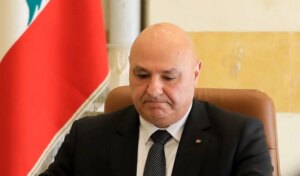
This may explain the party’s acceptance of sitting with Arab figures – even through intermediaries – to discuss offers. What has been leaked about a meeting between the Saudi envoy Yezid bin Farhan and a figure said to be from the party cannot be ignored, especially after bin Farhan postponed his previous visit to Beirut for technical reasons said to be related to the presence of President Joseph Aoun in Bulgaria and the Director General of Public Security, Major General Hassan Shaqir, in the Emirates.
In the same context, the visit of the French President’s advisor to Beirut and her meetings with leaders in the party cannot be ignored, as Paris was the only party that explicitly announced official meetings with him. This track also coincides with Egyptian-French and French-Saudi meetings held in Paris to coordinate efforts on the Lebanese file.
Undermining the Political Moment
In conclusion, the atmosphere indicated a push to achieve a real breakthrough, with the belief that the current round of talks may be the last before the escalation. But Israel surprised everyone with the attack on the suburb, undermining all the political atmosphere that had formed, and making the assassination itself a prelude to escalation rather than a result of it.