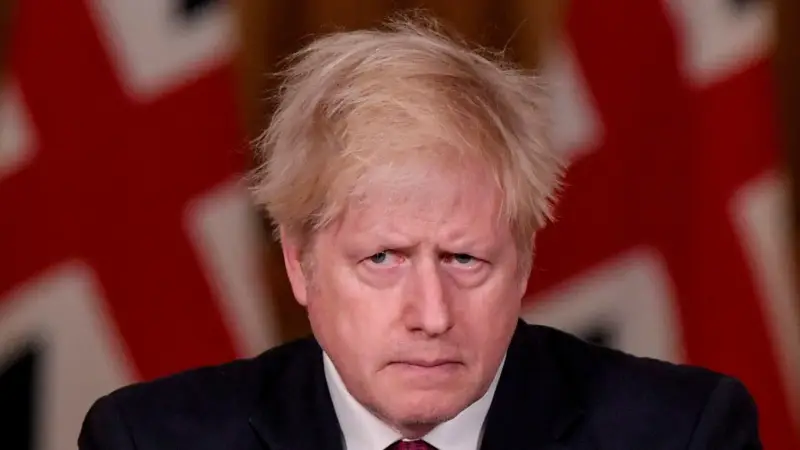
An inquiry in the United Kingdom into the country’s handling of the Covid-19 crisis also revealed that the then Prime Minister, and his chief advisor “Dominic Cummings,” oversaw what was described as a “toxic and chaotic culture” inside the Prime Minister’s headquarters, which witnessed a clear disregard for the views of women.
The report concluded that more than 20,000 lives could have been saved in England if lockdown measures had been implemented just one week earlier than they actually were in March 2020.
It turned out that Westminster and the other three self-governing regions had taken “inadequate and delayed” measures in the face of the rapid spread of the virus.
## Delay in imposing a nationwide lockdown
Starting on March 16, 2020, self-isolation and social distancing measures began to be implemented, with schools and pubs closing later that week, before ministers took the unprecedented step of imposing the first comprehensive and complete lockdown on March 23.
The report stated that “had stricter restrictions, excluding a ‘stay at home’ lockdown, been imposed before March 16, the duration of the mandatory lockdown that was imposed may have been shorter, or perhaps not necessary at all.”
However, if the mandatory lockdown had started on March 16 previously, “modeling would have shown that the number of deaths in England in the first wave until July 1, 2020 would have decreased by 48%, which is equivalent to a decrease in the number of deaths by about 23,000 deaths.”
The report also reached the following conclusions:
* The parties scandal and other violations of Covid rules caused “enormous financial distress” to the public, especially to people who adhered to the rules and guidelines despite the high personal and financial costs.
* “Johnson” repeatedly changed his mind in September and October of 2020 “regarding imposing stricter restrictions,” and “failed to make decisions in a timely manner.” The report indicates that “his wavering enabled the virus to continue spreading at a rapid pace,” and led to the second 4-week lockdown in November.
* Attempts to ease restrictions during the Christmas period in 2020 to allow people to meet with their families, which had to be scaled back or canceled, led to “false hope” among the general public.