UEFA has approved Barcelona’s request to return to playing at the Spotify Camp Nou stadium in Champions League matches, even though the tournament’s regulations usually do not allow stadium changes during the group stage.
This exception came after studying the Catalan club’s request, which confirmed that the goal is not to gain a fan advantage, but to return to “its stadium after a forced absence due to renovation work.”
The Spanish newspaper “Mundo Deportivo” stated that the strong relations between Barcelona and UEFA played a role in making this decision, as happened when the European Union agreed to the club’s request to start its journey in the current edition away from home.
The newspaper pointed out that UEFA inspectors will visit Spotify Camp Nou on Saturday, November 29th, during the Deportivo Alaves match, to examine the operational aspects of the stadium, which is the team’s second match at home after returning.
The Champions League competitions will return to Spotify Camp Nou after an absence of 1,140 days since the last European match the team played there, which was the defeat against Bayern Munich with a score of (0-3) on October 26, 2022.
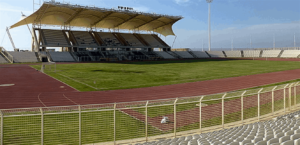
According to information published by the newspaper, UEFA has given the green light for Barcelona’s match against Eintracht Frankfurt to be held on Tuesday, December 9 (21:00), at “Camp Nou instead of Lluís Companys Olympic Stadium.”
The regulations raised some doubts, as clause 25.08 of the tournament law stipulates that any change in the stadium is prohibited during the league stage, but UEFA accepted Barcelona’s interpretation, which explained that the return is not related to any sporting or fan advantage, but to ending “the force majeure conditions that imposed the temporary move due to the redesign project.”
This goes back to the past months, when the strong relationship between Joan Laporta, the president of Barcelona, and Aleksander Čeferin, the president of UEFA, played an important role in obtaining approval to start the 2025-26 Champions League season away from home, in order to give the club an additional two weeks to prepare the Lluís Companys stadium after the end of the summer parties, although the original goal was to start the season at “Spotify Camp Nou.”
After the club obtained the “initial occupancy permit” from the Barcelona Municipality within Phase 1B, which allows the opening of the eastern side stand in Camp Nou during the Athletic Bilbao match next Saturday, the stadium is ready to host Champions League matches again.
UEFA had stipulated the presence of an audience behind the broadcast cameras in the “television side”, in addition to allocating 5% of the capacity to the fans of the visiting team.
After Barcelona submitted all the required documents, the response came from the Union’s headquarters in Nyon, approving the Catalan club’s request.
Camp Nou History
Camp Nou Stadium is one of the most important sports landmarks in the world and a symbol of the history of the prestigious Barcelona club.
The stadium was officially opened on September 24, 1957, after years of planning and construction to meet the club’s growing needs after successive successes in Spanish football.
The construction of Camp Nou came as a solution to the previous stadium, the Casa Via stadium, which was no longer able to accommodate the increasing number of fans and was far from the level the club aspired to at that time.
Initially, Camp Nou was designed to accommodate approximately 93,000 spectators, making it one of the largest stadiums in Europe at that time. Its architectural design came to keep pace with international standards, with wide areas for seats and a stadium equipped with the latest technologies of that period.
The large area of the stands contributed to creating an exceptional atmosphere inside the stadium, making it quickly the focus of attention of football fans from all over the world, and home to the Barcelona club fans who were famous for their great enthusiasm.
Over the decades, Camp Nou has witnessed many developments and expansions. In the 1970s and 1980s, the club began to introduce improvements to the facilities and infrastructure, including expanding the stands and installing comfortable seats, in addition to developing areas dedicated to the media and luxury boxes. Over time, the stadium became equipped with the latest lighting systems and display screens, with improvements in safety and security systems, making the fans’ experience more comfortable and safe.
Among the historical events witnessed by the stadium, it hosted many major matches, both locally and internationally. It has hosted the finals of the Spanish King’s Cup and the Champions League, as well as the Spanish national team matches in different periods. The history of Camp Nou is not limited to football only, but it has also hosted other sporting events and huge concerts, reflecting its status as a cultural and sports landmark in the heart of Barcelona.
Camp Nou is considered more than just a stadium; it is a symbol of the identity and culture of the Catalan club. The famous wall at the entrance to the stadium, decorated with pictures and achievements of the club, reflects Barcelona’s history spanning more than a century. The stadium has also become an important tourist center, with thousands of visitors visiting it annually to learn about the club’s museum and take a tour around the stadium, allowing them to experience a historical, cultural and sporting experience at the same time.
In recent years, Camp Nou has entered a new phase of development with the “Espai Barça” project, which aims to modernize all the club’s facilities and increase the stadium’s capacity.
The project includes improvements to the infrastructure, the creation of multi-use areas, the improvement of public services, as well as the provision of the latest technologies in lighting, sound and surveillance. This project aims to make Camp Nou one of the most developed stadiums in the world, while preserving its historical and cultural identity.
Camp Nou remains a true icon of football, not only as a large stadium with a distinctive architectural design, but also as a symbol of the club and its fans, where every corner of the stadium carries memories of victories and championships, from historical goals to decisive moments in European and local championships.
The history of Camp Nou is the history of Barcelona itself, as every expansion or development reflects the club’s desire to keep pace with the times without abandoning its ancient heritage.