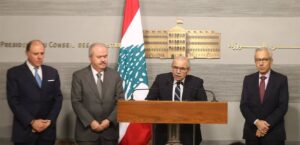
Minister “Hani” explained that the Saudi market has historically been the lung through which Lebanese agricultural exports breathe, stressing that reopening it represents support and stability for a sector that relies heavily on the Gulf markets.
Figures Before 2020: The Pivotal Role of Saudi Arabia and the Gulf
Data from the Ministry of Agriculture indicates that before 2020:
45% of Lebanese agricultural exports were destined for the Gulf countries.
Of which 13% to Saudi Arabia,
12.5% to Kuwait,
7.6% to Qatar,
7.5% to the Emirates,
3% to the Sultanate of Oman,
1.5% to Bahrain.
The quantities exported to the Gulf region amounted to about 200 thousand tons of vegetables, fruits and their derivatives, out of 500 thousand tons of total agricultural exports, including about 60 thousand tons to the Kingdom of Saudi Arabia alone.
On the economic side, the value of agricultural exports to the Gulf in 2020 reached $242 million, including $32 million to Saudi Arabia.
The historical trade balance between Lebanon and the Kingdom of Saudi Arabia amounted to $700 million ($300 million exports from Lebanon and $400 million imports from the Kingdom), of which approximately $200 million was agricultural crops.
2024 Shocks: Unprecedented Contraction
Figures show that 2024 was the most severe year for this sector:
Exports to Saudi Arabia have been completely stopped since 2021.
Exports to the Gulf countries in general decreased to only 77 thousand tons.
The total value of exports to the Gulf fell to low levels compared to what it was before 2020, leading to a large gap in the market.
The Importance of the Anticipated Step
Based on these data, Minister “Hani” confirms that reopening the Saudi market to Lebanese products is not just a resumption of a commercial process, but an opportunity to revive an entire sector, and restore the ability of farmers and exporters to compete in a historical market that has welcomed Lebanese products for decades.
Therefore, opening the Saudi markets:
Gives a strong boost to the agricultural export sector, which has suffered several shocks since 2020.
Enhances confidence in the Lebanese product in the Gulf region, and contributes to alleviating the economic burdens on thousands of families that depend on agriculture and export.
The figures clearly illustrate the extent of the strategic benefits of the return of the Saudi market, not only as a destination for export, but as an essential element for the regularity of the agricultural economic cycle in Lebanon.
With positive expectations for the imminent reopening of this vital market, observers believe that the Lebanese agricultural sector may be on the verge of a new phase of recovery and prosperity.