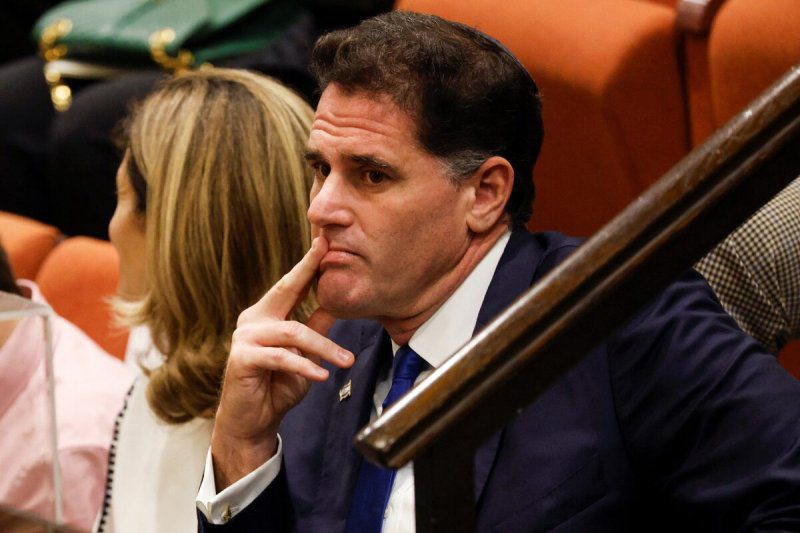
The Hebrew-language Channel 7 stated that Dermer, who is considered very close to Netanyahu, had informed the head of the government of his decision, citing personal reasons for the resignation.
In a message sent to Netanyahu, Dermer stated: “I do not know what the future holds for me, but whatever I do, I will continue to play my part in securing the future of the Jewish people.”
The resigning minister explained that he had made a promise to his family since his appointment to his government position to serve for only two years, but he extended his term twice “to contribute to removing the existential threat posed by nuclear Iran,” and then “to continue working with Netanyahu until the end of the war in Gaza according to Israeli conditions and the return of the prisoners.”
Dermer affirmed in the text of his resignation that the current government “will be remembered because of the October 7 attack, and because of the management of the war that has been ongoing since then on seven fronts,” stressing that “the history of the Jewish people has not been defined by its dark days, but by its ability to overcome them.”
The resigning minister also added that Israel “dealt a devastating blow to the axis of armed groups supported by Iran,” and that it stands today—two years after the war—”in a victorious position capable of opening a new era of security, prosperity, and peace.”
It is worth mentioning that Ron Dermer is considered one of the figures closest to Netanyahu, as he assumed responsibility for sensitive files related to coordination with Washington, the war against Gaza and Iran, in addition to heading the team of indirect negotiations with Hamas during periods of intermittent calm.
Dermer’s resignation is a political loss for Netanyahu, who relies on him as one of his most important strategic advisors in the field of foreign relations and national security issues.