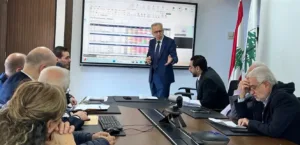
In his speech, Abdullah affirmed that “the Kafala system still constitutes one of the most prominent forms of forced labor in the Arab region, representing a flagrant violation of human rights and the dignity of migrant workers, as it deprives them of the most basic forms of legal and social protection and makes their fate dependent on the employer.” He added that “the lack of effective legal protection for migrant workers, especially domestic workers, opens the door wide to exploitation, violence, and human trafficking.”
He pointed out that “the countries that send migrant workers rely in their national budgets on the financial remittances of these workers, which constitute a primary source of national income, which often makes them overlook the serious violations to which their workers are exposed in countries of expatriation.”
Regarding Lebanon, Abdullah explained that “the system of recruiting domestic workers is still subject to the Kafala system, which makes tens of thousands of workers from Africa and Asia live in inhuman conditions and without any real protection from the state.” He also spoke about the weakness of the Lebanese labor market in light of the economic crisis and financial collapse, where “Lebanese and migrant workers share the same suffering as a result of low wages and the absence of social security.”
He also addressed the phenomenon of the migration of scientific expertise and university youth from Lebanon, considering it to be “a dangerous economic and social drain that threatens the future of the country, as Lebanon has turned from a country exporting expertise to a country expelling its youth and skilled workers as a result of the absence of fair social and development policies.”
Abdullah called for:
“-Abolishing the Kafala system completely and replacing it with fair employment contracts that respect the basic rights of workers.
-Ensuring equality in wages, rights, and social protection for all workers without any discrimination.
-Strengthening international and national oversight mechanisms to combat forced labor and human trafficking.
-Launching a real regional and international dialogue between governments and labor unions to develop fair policies that protect migrant workers and ensure comprehensive human development.”
He affirmed that “the rights of migrant workers are an integral part of the global struggle for social justice and human dignity, and that silence about the Kafala system is tantamount to legitimizing a new slavery that cannot be accepted in the twenty-first century.”
In his concluding remarks, Abdullah stressed that “the defense of social justice and human rights is inseparable from confronting aggression and injustice wherever it may be,” noting that “the ongoing Zionist aggression against Lebanon and Gaza reveals once again the true face of an unjust world order, which colludes with the occupation and remains silent about its crimes against peoples, workers, children, and women.” He called for “unifying the struggle of unions and social organizations globally in defense of the right to life, freedom, and dignity, and against all forms of occupation, exploitation, and discrimination.” (National Agency)