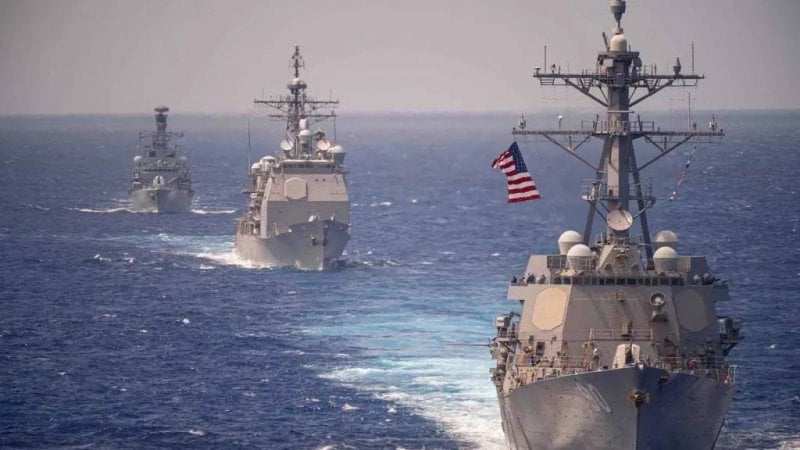
The newspaper stated that the current American military force consists of eight warships, a nuclear submarine, and a special mission ship, and is supported by air from American bases in the Caribbean region, including strategic B-52 bombers and advanced “F-35” fighter jets.
The report indicated that the largest American aircraft carrier, “USS Gerald R. Ford,” accompanied by five other warships, is en route from Europe to the Venezuelan coast and is expected to arrive in the region within the next few days.
According to the newspaper’s estimates, the total number of American military personnel in the region, including the aircraft carrier’s strike group, which includes about 4,000 soldiers, may rise to 16,000 soldiers.
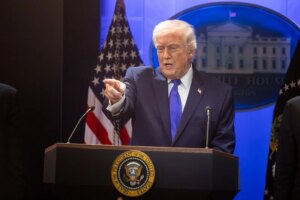
The “Washington Post” confirmed that this unprecedented American military deployment in the Caribbean reflects the readiness of President Donald Trump’s administration to expand the scope of its operations in the region, a move that could increase tensions between Washington and Caracas and increase the likelihood of military strikes against Venezuela.
The newspaper points out that Washington accuses the Venezuelan government of failing to combat drug trafficking, while Caracas considers American moves to be aimed at destabilization and paving the way for regime change.
Previous reports had mentioned that the US Navy had already deployed eight ships and one nuclear submarine along with ten thousand soldiers in the Caribbean Sea, where it is destroying speedboats suspected of transporting drugs from Venezuela across international waters.
The newspaper quoted the “New York Times” as saying that US President Donald Trump ordered his administration to halt any diplomatic efforts to ease tensions with Venezuela, and also allowed the US Central Intelligence Agency (CIA) to carry out secret operations inside Venezuelan territory.
However, Trump confirmed on October 31 that he is “not thinking about launching strikes on Venezuelan territory,” in a statement that seems contradictory to the military build-up in the Caribbean Sea.
It is worth noting that relations between the United States and Venezuela have been witnessing increasing tension for years, in light of the economic and political sanctions imposed by Washington on the regime of President Nicolás Maduro, and the mutual accusations about supporting drug trafficking and interfering in internal affairs.