In this context, military expert and former U.S. Army Colonel Mark Cancian explained that “the operation may be considered by the Venezuelan regime, which is characterized by its authoritarian rule under President Nicolás Maduro, as a message of intimidation and provocation.”
These developments come as the United States seeks to strengthen its military presence in both the Caribbean Sea and the Eastern Pacific, by deploying warships, aircraft, and thousands of soldiers as part of simultaneous military operations.
While Washington insists that the goal of these moves is to combat drug trafficking networks, the move has raised many questions about the possibility of launching attacks on Venezuelan military targets without the approval of the U.S. Congress.
On Friday, Venezuelan President Nicolás Maduro accused the United States of “fabricating a false narrative to justify a military attack and regime change in the country.”
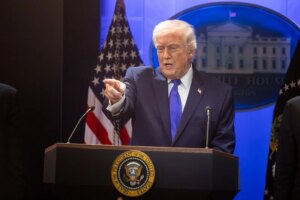
On October 24, U.S. President Donald Trump stated, “The percentage of drugs that come by sea has dropped to 5 percent of what it was last year, so the smugglers have started using land routes, and we will deal with that soon,” then later denied any intention of carrying out strikes inside Venezuelan territory, in a clear reversal of his previous statements.
According to announcements published by Trump and U.S. Secretary of War Pete Hegseth on Truth Social and X platforms, strikes targeting boats since the start of operations on September 2 have resulted in the deaths of 61 people.
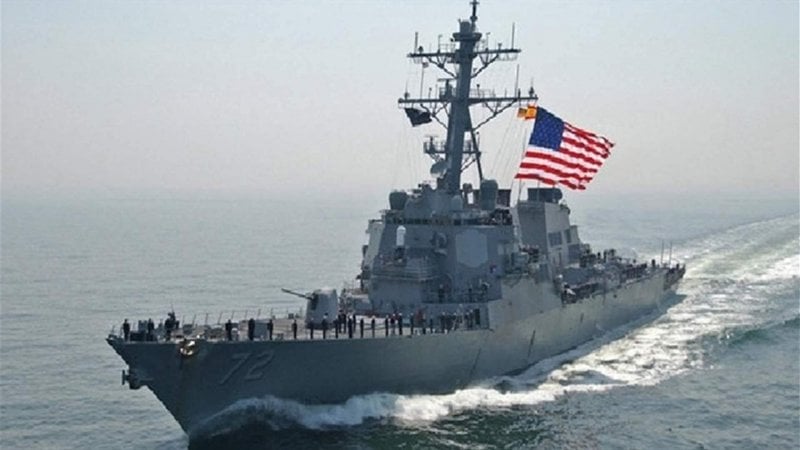
Satellite images verified by Sky News show the presence of the U.S. destroyer USS Iwo Jima conducting live-fire exercises, less than 200 kilometers from the Venezuelan coast.
The Iwo Jima is an amphibious assault ship used in military landing operations and is an essential part of the U.S. rapid deployment forces. The ship was seen alongside two other U.S. destroyers about 20 kilometers away.
The arrival of the Iwo Jima comes after the announcement of the transfer of the aircraft carrier USS Gerald R. Ford to the Caribbean Sea accompanied by three other destroyers.
In a post on the “X” platform on October 24, Shawn Parnell, Assistant Secretary of War for Public Affairs, explained that these forces aim to “enhance existing capabilities to disrupt drug trafficking and dismantle transnational criminal organizations.”
Despite Washington’s assertion that the goal of these moves is to target boats suspected of smuggling drugs, there is still no conclusive evidence to support this claim.
The recent military deployment shows that approximately 14 percent of the U.S. Navy fleet is now stationed in the Caribbean Sea, which is considered a significant military escalation in the vicinity of Venezuela.
The aircraft carrier Gerald R. Ford was also spotted on October 29 near the Italian coast, heading towards the Caribbean Sea as part of the expanded military deployment.