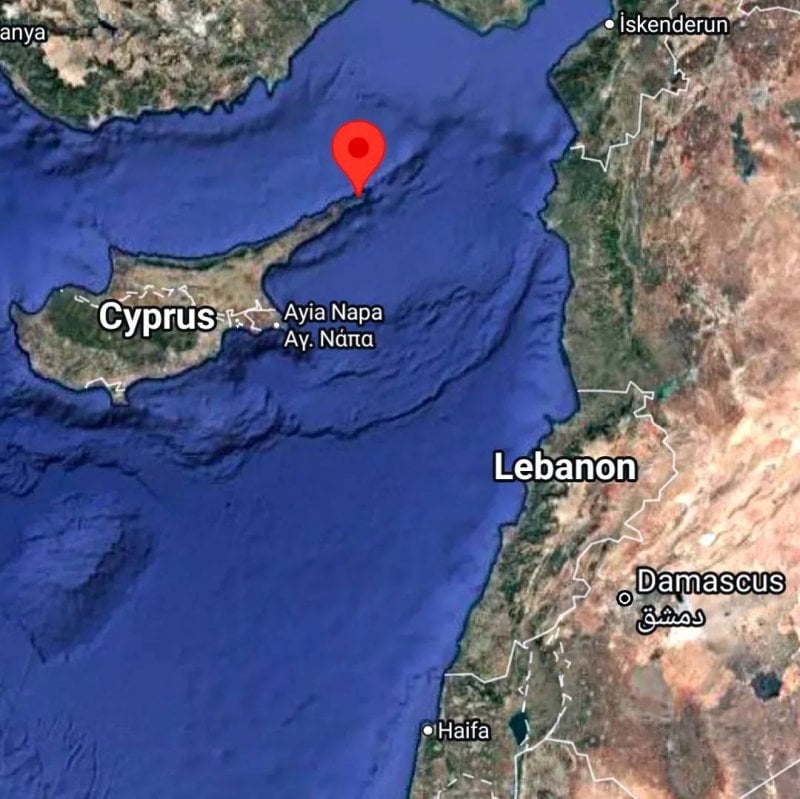
In a significant development, the Lebanese government has decided to move forward with the maritime border demarcation project with Cyprus, according to the 2007 agreement, in an attempt to revive the offshore gas file and accelerate investment in national resources amid the severe economic crisis Lebanon is suffering from.
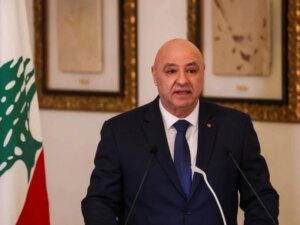
In this context, the National General Coordinator of the Lebanese Coalition for Good Governance, Maroun El Khouli, expressed his welcome for this decision, considering it a realistic and responsible approach based on clear technical and legal data, away from populist bidding.
In a statement to , El Khouli explained that returning to the 2007 agreement is not a concession of sovereignty, as some are trying to portray it, but rather an option based on a precise understanding of Lebanese interests, adding: “Legal studies and technical maps have proven that going to international arbitration will not grant Lebanon additional gains, but will drain time at a moment when every minute is considered of direct economic value.”
He also pointed out that the world is rapidly moving towards renewable energy sources, which means that the strategic value of oil and gas will gradually decrease over the next decade, and therefore any further delay in starting investment will represent a strategic loss that goes beyond any discussion about demarcation lines.
El Khouli stressed that the opportunity available to Lebanon today is narrow and time-limited, saying: “We must exploit what remains of the traditional energy market era, to compensate for part of the huge losses that have affected the economy, and to inject real resources that restore confidence in the state and the financial sector.”
He pointed out that the main battle is not over a few maritime kilometers, but over saving the national economy and rebuilding the financial capacity of the state, calling for a comprehensive national plan for governance in the oil and gas sector that guarantees transparency, prevents monopoly, and restores the citizen’s and investor’s confidence in the state’s management of this file.
El Khouli stressed that what is required today is not only the demarcation decision, but also accelerating the launch of the fourth offshore licensing round and working according to a clear timetable, because time has become “more valuable than space,” as he put it.
The gas file remains one of the most possible solutions to save Lebanon. The country, which has depleted its resources, needs a courageous and responsible decision that is translated on the ground and not in media discussions. In light of the ongoing collapse, every day of delay represents a national loss, while accelerating investment may be the last hope before gas turns into another lost opportunity added to the record of wasted opportunities.
Regarding the assignment of Block No. 8, El Khouli explained to that the coalition will issue a detailed statement in the coming days addressing the technical aspects, the assignment mechanism, the terms of the contract, and the associated deadlines.