Lebanon Today
Iranian presidential sources reported that Iranian President “Masoud Pezeshkian” proposed, on Tuesday, the idea of establishing a unified regional currency. This proposal aims to support trade exchange between the countries of the region, especially in light of the difficult circumstances facing Iran as a result of international sanctions that negatively affect its economy.
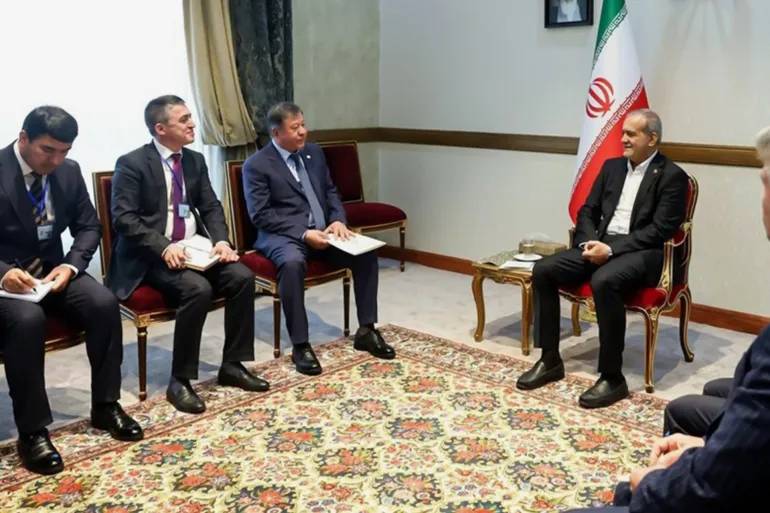
During a meeting held by “Pezeshkian” in Tehran with the Tajik Minister of Interior, he explained that adopting a common currency would enhance economic development in the region. He pointed out that there are foreign parties seeking to obstruct the good relations between the countries of the region.
It is noteworthy that the international sanctions, most notably those imposed by the United States due to Iran’s nuclear program, represent a major challenge to Iranian trade and financial transactions with the world. This has significantly affected the Iranian economy and led to a decrease in the value of the rial against the dollar, which has exacerbated inflation.
The Iranian President stated this during the Economic Cooperation Organization summit in Tehran, stressing that the religious and cultural ties that unite the countries of the region provide great opportunities to enhance communication and overcome obstacles. He warned against attempts to stir up strife among the peoples of the region in various ways, stressing that unity is strength, while division is weakness.
“Pezeshkian” described the Economic Cooperation Organization as a bridge linking the countries of the region, considering that cooperation within its framework is no longer just a political option, but a necessity to achieve development, security and stability. He also affirmed that Iran’s geographical location, which connects Europe and Asia, gives it a strategic advantage that can be used economically.
It is worth mentioning that the Economic Cooperation Organization was established in 1985 at the initiative of Iran, Pakistan and Turkey with the aim of promoting trade exchange. It currently includes ten countries, including five countries in Central Asia, in addition to Azerbaijan and Afghanistan, and its population is more than 550 million people. Iran seeks to strengthen its cooperation with neighboring countries to expand its trade outlets in light of the ongoing tension with Western countries regarding its nuclear program.
In a related context, the UN Security Council reimposed sanctions on Tehran in late September after France, Britain and Germany activated the “trigger” mechanism stipulated in the 2015 nuclear agreement, from which the United States unilaterally withdrew in 2018.
source: 961 today