Lebanon Today
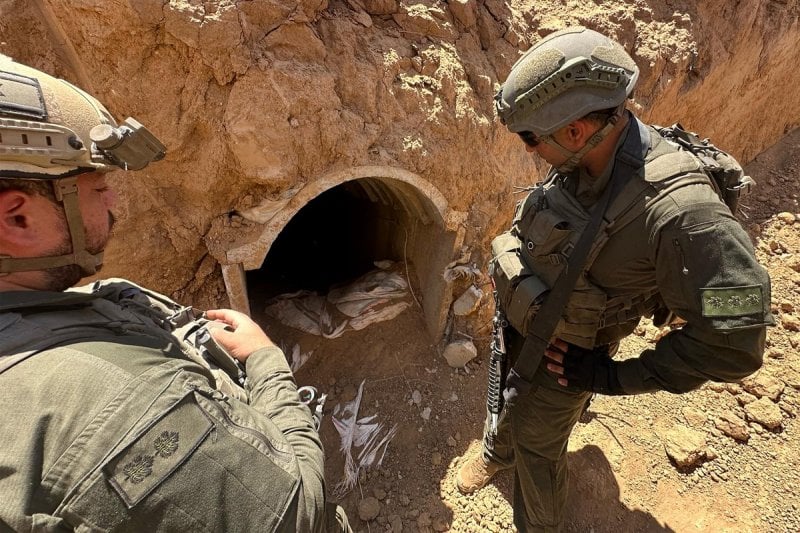
Amidst the rubble and devastation left by the war in Gaza, the features of a new phase of the Israeli conflict with Hamas are becoming clear, this time centered around the “battle of the tunnels.” After years of confrontations, Israel is once again placing this issue at the top of its military priorities, considering it – as stated by Israeli Defense Minister Israel Katz – “the backbone of the movement’s military capabilities.”
Katz’s recent statements, in which he indicated that 60% of Hamas’ tunnels still exist, raised questions about the movement’s ability to maintain its underground infrastructure, and the extent of Israel’s success in destroying what it calls Hamas’ “hidden artery,” which has posed a constant threat to its army and settlements for years.
Katz affirmed that the operation to “disarm Gaza” is not limited to collecting weapons from the factions, but also includes the complete elimination of the Hamas tunnel network. He pointed out that he directed the Israeli army to make this file a top priority in the yellow zone under Israeli control.
“Channel 12 Israel” described the tunnels as Hamas’ “center of military confidence,” considering that the coming war will be deep in the ground, not in the sky. Military estimates indicate that the tunnel network consists of about 1,300 tunnels, extending for a distance of 500 kilometers, and some of them reach a depth of 70 meters, making their destruction a complex task requiring advanced technologies.
According to Israeli reports, the Israeli army used explosive robots and advanced sensors during its recent operations to penetrate the subsoil, in addition to aerial espionage systems that drew accurate maps of the tunnels.
The Italian website “Inside Over” revealed that Israel used technologies based on artificial intelligence and multi-layered sensor systems, specifically developed to accurately locate tunnels, which changed the nature of the battle and expanded the scope of Israeli control in the field.
Kobi Lavi, a former advisor in the Israeli Ministry of Defense, said in a statement to Sky News Arabia that the situation of the tunnels has changed radically after the last war. He explained that Israel avoided completely destroying the tunnels during previous battles for fear of the lives of the abductees who Hamas was holding and moving through these passages.
He added that “popular pressure not to harm the abductees imposed operational restrictions on the army,” but this equation – according to Lavi – has changed today after the delivery or recovery of most of the abductees, saying:
“There is no longer any fear of targeting the tunnels. Anyone seeking a future settlement does not want them to continue to exist, but wants to ensure that they are not used against Israel again.”
Lavi believes that the survival of the tunnels means the continuation of the threat to Israel as long as Hamas is in power, considering that “the absence of the movement from power will end the need for this military infrastructure completely.”
Lavi affirms that Israel today possesses advanced intelligence capabilities that enable it to draw an accurate map of most of the tunnels, noting that the army considers eliminating them a security priority that cannot be postponed, especially in the areas under its direct control within the sector.
He added that “Israel has the right to take all military measures to protect its soldiers and citizens and prevent a recurrence of the events of October 7,” referring to Hamas’ attacks on Israeli settlements.
The Israeli advisor believes that the battle is not limited to the military side, but is linked to broader political understandings sponsored by Washington and a number of Arab countries, noting that there is implicit international and Arab approval for Hamas not to remain in power.
He pointed out that Hamas is still “stalling in handing over the bodies of some of the abductees,” which he considers a violation of the agreements concluded, considering that the movement “fears that the implementation of the agreement will lead to its political demise.”
Lavi believes that frustration within the ranks of Hamas has reached its peak after two years of war, saying: “In Gaza, difficult questions are being asked: What has been achieved after the attacks of October 7? No liberation, no gains, only total destruction and loss of rule.”
He considers that this realization “means Hamas’ loss of legitimacy and its ability to continue,” and that it has “become a burden on the Palestinians themselves.”
Regarding the statements of Israeli Prime Minister Benjamin Netanyahu about the possibility of an international presence in Gaza after the war, Lavi said that Israel “does not object to the principle,” but it refuses to involve countries that it considers non-neutral or supportive of Hamas, stressing that Israel “is dealing with a new reality that puts an end to the movement’s de facto authority in the sector.”
Lavi did not fail to refer to the Iranian role, saying that “Hamas has long implemented an agenda that serves the Iranian regime, which financed and directed it politically and militarily,” noting that the decline in the influence of Tehran and Hezbollah in other arenas prompted the movement to accept the new conditions “not out of love for Israel, but out of realization of the change in regional power balances.”
The battle of the tunnels in Gaza seems bigger than just an underground confrontation; it is a conflict over the future of governance in the sector, and over redrawing the political and security map of the post-war era.
While Israel insists on disarming Gaza and destroying Hamas’ infrastructure, Washington and Arab countries are betting on a settlement that opens the door to a new transitional phase that reshapes the situation in the sector and the surrounding areas.
source: 961 today