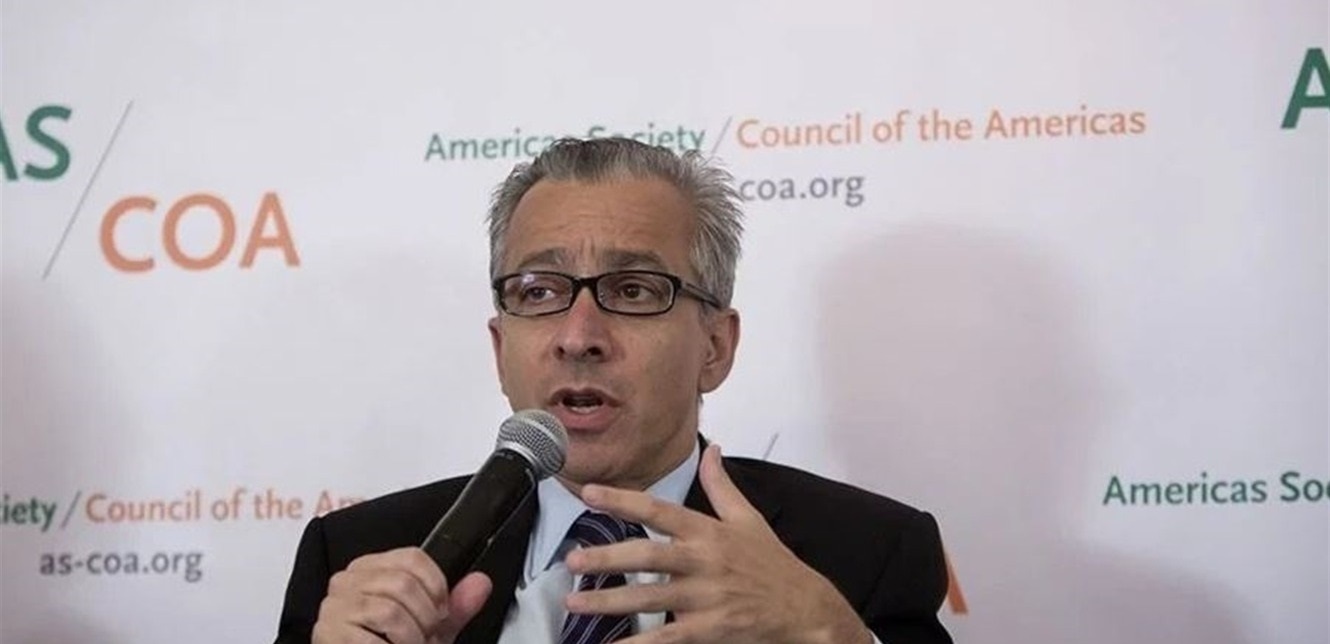
The “National Bloc” hosted, at its headquarters in Gemayzeh, as part of the “Session with the Bloc” series, the Minister of Economy and Trade, Amer Bsat, in a dialogue with economic journalist Khaled Abu Shaqra. The meeting addressed the most prominent challenges facing the Lebanese economy, the program with the International Monetary Fund, the required reforms, and the state’s plan for recovery and addressing public debt.
According to a statement, the session began with a speech by the Secretary-General of the Bloc, Michel Helou, who stressed that despite the fact that “the current government of President Nawaf Salam is considered one of the best governments Lebanon has known in years, due to its efforts to rebuild the state, the reform train is not moving at the required speed,” confirming “that all external aid or even internal wealth will not be useful if the state is not rebuilt on the foundations of good governance and transparency.”
For his part, Minister Bsat explained that “the Lebanese economy is still going through difficult circumstances, and that state institutions suffer from a structural weakness that requires decisive decisions.” He pointed out that “the country is going through a critical stage that requires overcoming previous taboos, where it has become possible to discuss fundamental issues such as lifting banking secrecy, restructuring banks, the independence of the judiciary, and the necessary austerity policies.” He stressed that “2025 is the best economically since 2011, and that Lebanon has begun to take a ‘real reform path’.”
He also stressed “the importance of achieving sustainable economic growth that depends on production, export and investment, and not on consumption and debt as it was in the past,” considering that “unhealthy growth” is the greatest danger if the required reforms are not completed.”
He affirmed that “enhancing the competitiveness of the private sector and reforming the relationship between it and the public sector is a basic condition for stimulating growth,” noting that “this relationship is still unhealthy and needs rebalancing and a real partnership.”
The minister called for “a political and security transformation that provides the necessary stability for economic recovery,” considering that “there is no economic stability without a political solution and without addressing the issue of weapons.” He explained that “the government is working on reforming the banking sector and restructuring public debt in a manner commensurate with the state’s capabilities,” stressing that “there will be no write-off of depositors’ funds, and that Prime Minister Nawaf Salam stressed the ‘cancellation of the idea of writing off deposits’.”
Regarding the negotiations with the International Monetary Fund, Bsat affirmed that “Lebanon does not accept any agreement that does not serve its economic and national interests,” explaining that “the goal of the dialogue with the Fund is to benefit from its technical expertise and restore international confidence, through a umbrella of credibility that allows Lebanon to reopen to supporting institutions and countries.”
source: 961 today