:
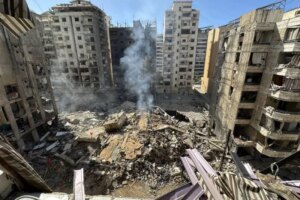
When we compare the events taking place in Gaza for about two weeks, with what has been happening in Lebanon for about a year, we clearly notice the pace of Israeli strikes and assassinations, which evoke the same scenario applied in Lebanon, despite the ceasefire agreement.
However, retired Major General Abdul Rahman Shehaitly, the former head of the Lebanese delegation negotiating the southern borders, believes that there is no similarity between the Gaza scenario and the Lebanon scenario.
In an interview with , Major General Shehaitly explains that “the situation in Lebanon differs from the situation in Gaza, and the ceasefire agreement in Lebanon differs from the Gaza plan. The Israeli assassinations and strikes target the parties and organizations that objected to this plan, because some have rejected it and decided to continue fighting because of the limited options available to them, and Israel’s insistence on targeting them despite the ceasefire, meaning that some will not escape the strike, even if they leave Gaza, and they will fight because they are dead – dead in any case.”
Major General Shehaitly points out that Israel is focusing in the first phase of the plan on “completing the list of liquidations in Gaza under the pretext of delaying Hamas in handing over the bodies of the Israelis in Gaza, in parallel with continuing to destroy some sites, especially since Israel has set a bank of targets and will implement it before moving to the second phase of the plan.”
According to Shehaitly, what is remarkable is “the silence of those concerned with sponsoring the Gaza plan, foremost among them Washington, and the absence of any kind of objection to Israel’s strikes.”
Compared to the Israeli assassinations and destructive strikes in Lebanon, Shehaitly confirms that Israel “wants to take Lebanon to signing a treaty, which will initially be a security treaty, to be followed later by political treaties, but official Lebanon cannot agree to this proposal today, due to the absence of political consensus and because the popular base objects, and therefore, the Israeli strikes aim to pressure official Lebanon and the popular base to agree to security negotiations.”
Therefore, Shehaitly puts what Israel is doing recently in the context of “pressure on the state and the people, which appears through a series of signals according to the following sequence: intensive drone flights and precise targeting of targets, then assassinations.”
Shehaitly explains that “the intensive drone flights in the last 48 hours over Beirut and its suburbs indicate a precise reconnaissance and monitoring of targets, paving the way for a phase of announced assassinations of specific personalities, and not directing strikes at centers, buildings or sites.”
source: 961 today