:
Recent statements by Parliament Speaker Nabih Berri, which were understood as a “eulogy” for the American initiative related to indirect negotiations between Lebanon and Israel, have raised new questions about the future of this sensitive file, and the reality of the official Lebanese position on any new negotiations in light of the escalating tension on the southern front and the increasing international mediations.
Informed political sources clarified to that what was meant by President Berri’s statements does not concern the initiative recently presented by President General Joseph Aoun, but rather a reference to a previous initiative carried by Thomas Barrack to Lebanon, which the Lebanese side agreed to, but Israel rejected, leading to its failure before it began.
Accordingly, the sources affirm that Berri’s position does not represent a demolition of President Aoun’s initiative, but rather a description of the reality of the negotiations and their failure due to Israel’s repeated rejection of any formula that guarantees Lebanon’s rights and borders.
The sources draw attention to the fact that the internal dispute does not revolve around the principle of negotiation itself, but rather around the mechanism that should be adopted. President Berri insists that the negotiation be indirect through the mechanism that was previously used in the maritime border demarcation negotiations, based on Lebanon’s commitments to previous agreements whose terms Israel has not implemented.
In contrast, others believe that the current political circumstance requires a more flexible approach, especially with the limited time and increasing American pressure to determine a clear path before the end of this year. One source likens the situation to “a groom who agreed with the bride’s father on the marriage, waiting for the bride’s approval,” in reference to the fact that the political understanding exists in principle, but the final decision is pending full agreement on the executive formula for the negotiations.
According to available information, Prime Minister Najib Mikati is the one who re-proposed the idea of negotiating according to the model that was followed during the maritime border demarcation agreement, while President Aoun seeks to bridge the views between the various political forces to unify the Lebanese position.
According to those in the know, President Aoun seeks to formulate a unified internal mechanism that strengthens the official position in the face of any future external proposal aimed at ending the state of war and occupation, while emphasizing the constants of sovereignty and rejecting gratuitous normalization.
According to the same sources, Aoun realizes that time is running out for Lebanon, especially since the American mediator has set the end of the year as a final date for reviewing positions, while Israel continues its field escalation on the border, making any further delay politically and security costly.
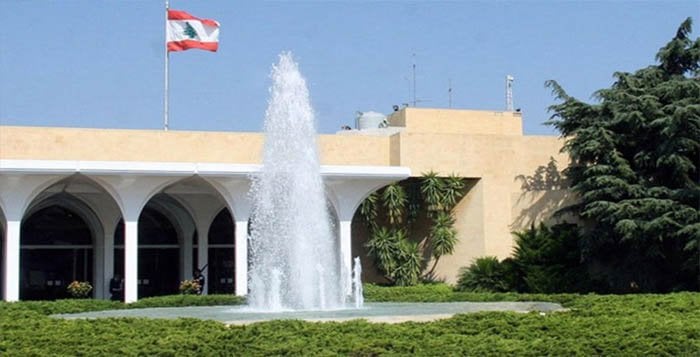
At the same time, observers noted the Israeli drones flying over the Baabda Palace, considering that this behavior carries political connotations and direct messages. Did Israel want to respond to President Aoun’s initiative with this? Some circles believe that this behavior reflects an implicit Israeli rejection of any serious negotiations, as Tel Aviv behaves from the position of “superior and holding the land,” and deals with Lebanon in the language of the victor, making it uninterested in any agreement that does not meet its conditions.
According to this reading, Israel seeks to impose a new equation that turns Lebanon into a subordinate zone of influence or a “backyard of Greater Israel,” which explains its political inflexibility and its disregard for any Lebanese or international initiative that does not conform to its security and geopolitical vision.
In conclusion, it appears that the Lebanese scene regarding the file of negotiation with Israel remains unclear, in which internal calculations intersect with external pressures, and is dominated by the divergence between those who call for activating diplomatic initiatives and those who warn against slipping into miscalculated concessions. As for the only constant, it is that the Israeli decision remains the main obstacle to any progress, while Lebanon, through its political and military institutions, is trying to establish an equation that preserves its right and prevents the imposition of conditions on it.
source: 961 today