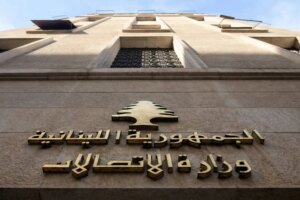
Based on the keenness of the Ministry of Economy and Trade and the Ministry of Agriculture on food safety and the health of citizens, Minister: Amer Basat, Minister of Economy and Trade, and Minister: Nizar Hani, Minister of Agriculture, issued a joint decision aimed at verifying the quality of an imported wheat shipment.
The decision stipulates the formation of a joint working team from the two ministries, which will be responsible for close coordination with Lebanese customs and the head of the agricultural quarantine center in the port of Beirut, in order to ensure the integrity of the procedures followed.
The team’s tasks include ensuring the continued presence of customs seals on the silos containing the imported wheat, and taking random samples of the wheat stored in the silos for accurate laboratory analysis. These analyzes aim to ensure that the wheat conforms to the approved Lebanese standards, and to ensure its quality and safety for consumption.
This decision comes against the background of a discrepancy in the results of the analyzes carried out on a shipment of Ukrainian wheat that arrived in Lebanon on January 18, 2023 for the benefit of the “Shabarq” company, amounting to 5406.4 tons. Some official and private laboratories showed different results regarding the extent to which the wheat conforms to the required specifications.
It is worth mentioning that the Ministry of Agriculture had previously rejected this shipment, after laboratory test results indicated that it did not meet the requirements of Ministry Decision No. 1/165 dated May 2, 2023. In contrast, the results of the Industrial Research Institute showed that the samples complied with Lebanese Standard No. 242/2014 for wheat and durum wheat.
In addition, the expert appointed by the Court of Urgent Matters stated that the quality of the wheat is “suitable for entry,” while the analyses of the Consumer Protection Directorate in the Ministry of Economy and Trade showed that part of the samples conformed to the Lebanese standard, and another part did not conform “but can be sterilized.”
Based on these data, the two ministers decided to assign the following tasks to the joint team:
* Coordination with customs to ensure that the customs seals remain on the silos, as evidence that the shipment has not been tampered with.
* Taking comprehensive samples from all silos and conducting the necessary analyzes in the Industrial Research Laboratory and the Tal Amara Laboratory, to ensure accurate and reliable results.
* Preparing a detailed and comprehensive report on the results of the analyses, explaining the extent to which the wheat conforms to the Lebanese specifications, assessing the impact of any potential violation, and determining the possibility of correcting and treating it.
The two ministers requested the joint team to submit the final report within one month from the date of issuance of the decision, and that each of the two ministers and the head of the Legal Affairs Authority in the Ministry of Justice be informed of the results, to take the appropriate decision in due course, in the interest of the safety of citizens and their food and health security.
source: 961 today