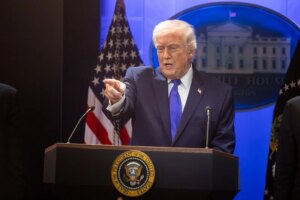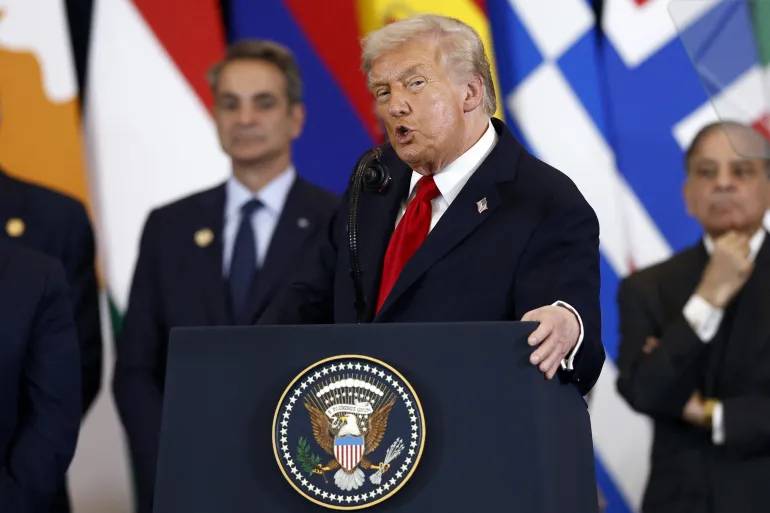
A global poll shows a marked decline in international confidence in “Donald Trump,” with significant differences between countries. This shift reflects widespread concern about U.S. foreign policies and their impact on international relations. These results raise questions about the future leadership role of the United States in the world.
A comprehensive global survey, conducted by the Pew Research Center in 2025, involving approximately 28,000 participants from 24 countries, revealed a sharp decline in global confidence in U.S. President “Donald Trump,” with only 34% expressing confidence in his ability to manage international affairs, compared to 62% who expressed doubts or distrust in his foreign policy orientations. This shift should not be read as a mere temporary popular stance, but as a highly significant indicator of the erosion of the United States’ position as a leading global power that enjoys trust.
It seems clear that the political approach adopted by “Trump,” based on confrontations, renegotiating traditional alliances, and raising the slogan “America First,” has had a clear negative impact on Washington’s image abroad. In Europe specifically, where the United States has established a strong network of alliances since the end of World War II, confidence in Washington has declined to unprecedented levels. Sweden recorded only 15% confidence in “Trump,” Germany 18%, France 22%, and Canada – Washington’s closest ally – a similar percentage, reflecting the beginning of a tangible shift in the strategic mood within the Atlantic camp.
In contrast, Nigeria shows the highest percentage of confidence in “Trump” at 79%, which analysts attribute to the alignment of his rhetoric with the rising conservative religious movements in West Africa, in addition to Abuja’s aspiration to strengthen security cooperation with Washington in the face of increasing armed threats in the Sahel region. In Mexico, distrust is almost total, with 91% of respondents expressing their rejection of “Trump,” in a direct reflection of the strained relationship between the two countries against the backdrop of the border wall file, deportation policies, and customs tariffs.
It is worth mentioning that the “Pew” survey is not limited to simply presenting numbers, but reveals the features of a complex image of the American president in the global imagination. While 67% of participants see him as a “strong leader,” 80% described him as “arrogant” and 65% considered him “dangerous,” which indicates a rare political paradox: recognizing power without granting legitimacy. With the decline in Washington’s moral image, its soft power – which has been a fundamental pillar of its international dominance – is facing an unprecedented shakeup since the end of the Cold War.
Observers believe that these figures, although they reflect a popular mood, are establishing deeper changes in the geopolitical environment, especially with the growing European voices calling for building defense independence from the American umbrella, in light of a growing feeling that the alliance with Washington is no longer guaranteed or based on mutual strategic trust as it was in the past.
source: 961 today