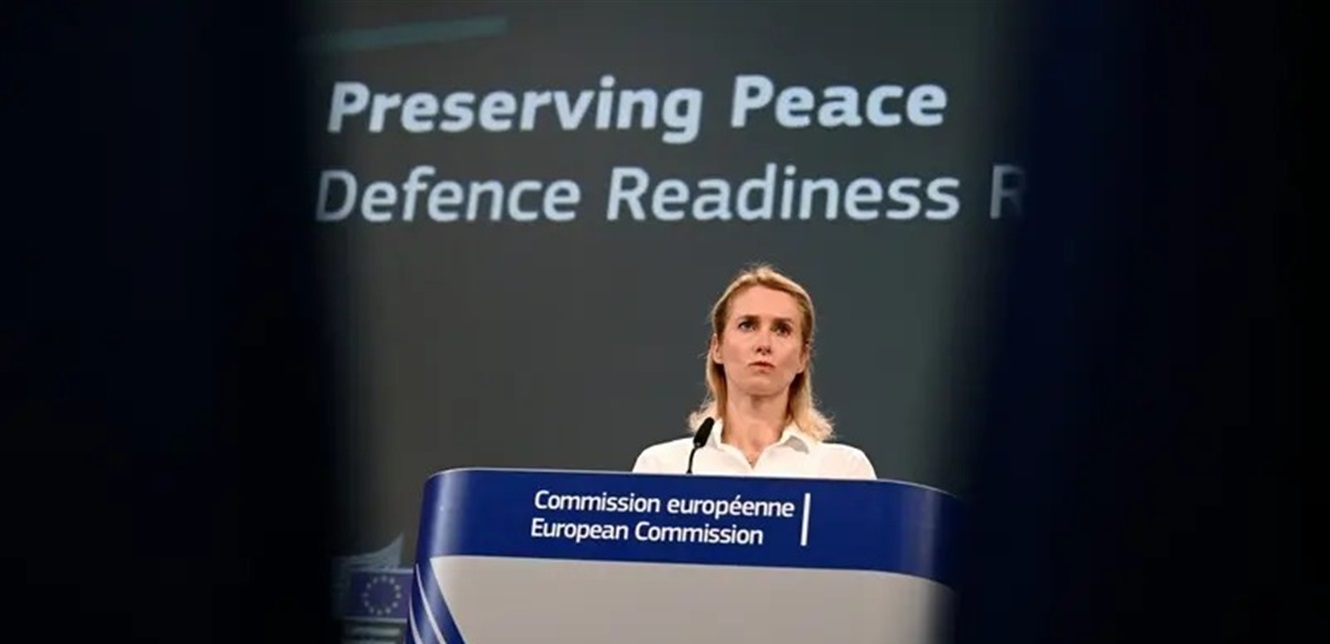
The EU’s foreign policy chief, Kaja Kallas, indicated that sanctions on Israel are still on the table, and that EU foreign ministers will discuss the situation in Gaza after the ceasefire. She added that the situation has changed in light of recent developments, and that the decision on the proposed sanctions rests with the foreign ministers.
Kaja Kallas, the EU’s foreign policy chief, stated that the possibility of imposing sanctions on Israel is still on the table. She pointed out that the foreign ministers of the EU countries will hold a thorough discussion of the current situation in the Gaza Strip, following the ceasefire agreement that was announced on October 10.
She added: “The scene has certainly changed against the backdrop of the events that took place during the past week, but the central question lies in the decision that the foreign ministers will take regarding the sanctions proposed on Israel.”
It is worth noting that Kallas’s statements came upon her arrival in Luxembourg to participate in the meeting of foreign ministers of the bloc, today, Monday.
It is worth mentioning that the European Commission broke a silence that lasted nearly two years regarding Israeli violations in the Gaza Strip, and on the tenth of September, it announced proposals aimed at imposing sanctions on Tel Aviv.
These proposals included a number of restrictions, including the suspension of the provisions for the free transfer of goods within the existing partnership agreement between the European Union and Israel, the imposition of customs duties, in addition to the imposition of sanctions on Israelis involved in the seizure of occupied Palestinian territories, and on ministers “Itamar Ben Gvir” and “Bezalel Smotrich.”
In a related context, Tel Aviv accused the European bloc of siding with Hamas, and “terrorists,” according to its expression. Israeli Foreign Minister Gideon Saar stated at the time that “any steps taken by the European Union against his country” will be met with an appropriate response, which we hope we will not have to resort to,” threatening that any move against Israel would harm Europe’s own interests.
It is recalled that the ceasefire agreement entered into force on the tenth of this month, according to a plan previously presented by US President Donald Trump, which, in addition to stopping the war, is based on a gradual withdrawal of the Israeli army from the Palestinian sector, a mutual release of prisoners, and immediate entry of humanitarian aid into Gaza.
source: 961 today