“The sugar went away and the idea came.” It is a Lebanese proverb to indicate the end of the time for enjoyment, entertainment, and prosperity, and the arrival of the time for seriousness, thought, and deliberation. This proverb is similar to what the poet Imru’ al-Qais said: “Today is wine, and tomorrow is matter.”
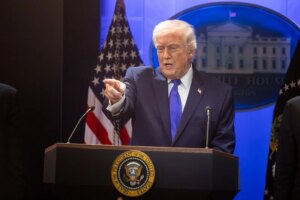
What happened the day before yesterday in Sharm El-Sheikh would not have happened if there had not been a unified Arab and international will to end the tragedy of a people who experienced both things over two continuous years, day and night. With this will, it is possible to establish what is to come. This coming on the back of an American horse may be much more difficult than the conditions of war itself. What the world heard from US President Donald Trump in Tel Aviv and Sharm El-Sheikh about peace were more than beautiful words. With these words, sometimes eloquent and sometimes not eloquent, a period of bloody wars ended and a new phase of peace began.
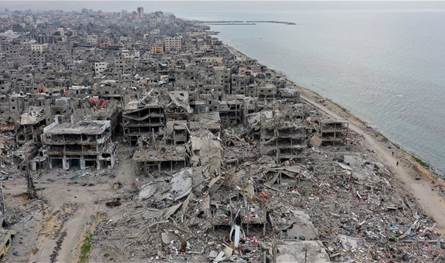
During the Two Years’ War, much blood was shed, tears were shed that have not yet dried, houses were destroyed over the heads of their residents, and squares of joy turned into squares of mourning, pain, and sadness. This is from the past. It is a black page that has been folded, but its blackness has not been folded. It is a page full of sorrows, tragedies, death, and destruction that will not be turned easily for those who lost someone dear to their heart, and for those who look at their home and see nothing but rubble and debris.
For this person standing in the open without shelter, refuge, or a support to lean on, the war that stole his children, his dreams, and his future has not ended. A “paper peace” is not peace, even if signing pieces of paper ended an era of hatred and hatred towards a people who suffered and are suffering greatly.
True peace for every Gazan or Gazawi is by restoring rights to their owners. No one can deny that relative joy, albeit incomplete, spread across the Strip from north to south. But this joy will not be complete unless all the bright promises contained in the words of October 13, 2025 are fulfilled.
Demolition is easy; One missile is enough to destroy a house whose construction required many years of toil, fatigue, sweat, and years of savings. But reconstruction requires time, and none of the people of Gaza, and by extension the people of southern Lebanon, know when sufficient support will come to achieve what cannot be achieved overnight. Waiting, how can daily life proceed amidst all this destruction?
Questions that must be asked. If the answers to these crucial questions are positive, then something can be built upon. However, if these questions remain without adequate and convincing answers, then betting on the future will remain ambiguous and unknown if it is not accompanied by sufficient measures to dispel doubts and reassure anxious and troubled souls. Among these practical measures required is to ensure the security of the people of Gaza. What is said about the Gazans is also true about the people of southern Lebanon. Security in such cases may come before the loaf of bread, even though the loaf of bread is one of the basic guarantees required before reaching the demand for rebuilding and returning life in the Gaza Strip and the south to normal.
These are triangular demands of equal importance: security, bread, and a home. The people of Gaza did not find these demands in President Trump’s words, which seemed, in terms of their strategic importance, to be an advanced step on the path to peace after a difficult struggle.
It is very beautiful what President Trump said about “the Gaza agreement establishing a new Middle East that rejects terrorism and lives in peace and stability.”
It is also nice that he said, “There will not be a third world war in the Middle East. For the first time we have a real chance to achieve peace. We want life to replace death, harmony to replace hatred, and unity to replace division. We will take the Middle East to a better future.”
But what he said about “that the first steps towards peace are the most difficult,” has a lot of realism. This is what must be pointed out. Because after the signing is much more difficult than before, even though “a number of rich countries have expressed their desire to help with the reconstruction of the Gaza Strip.”